
When "It Shouldn't Be This Way" Holds You Back
I had a rather ridiculous reaction while playing the New York Times Connections game the other night.
And as silly as it was, I recognized it as the same kind of thinking that gets in the way of so many women's efforts to build healthier routines.
If you're not familiar with Connections, you're given 16 words and have to sort them into four groups of four based on something they have in common.
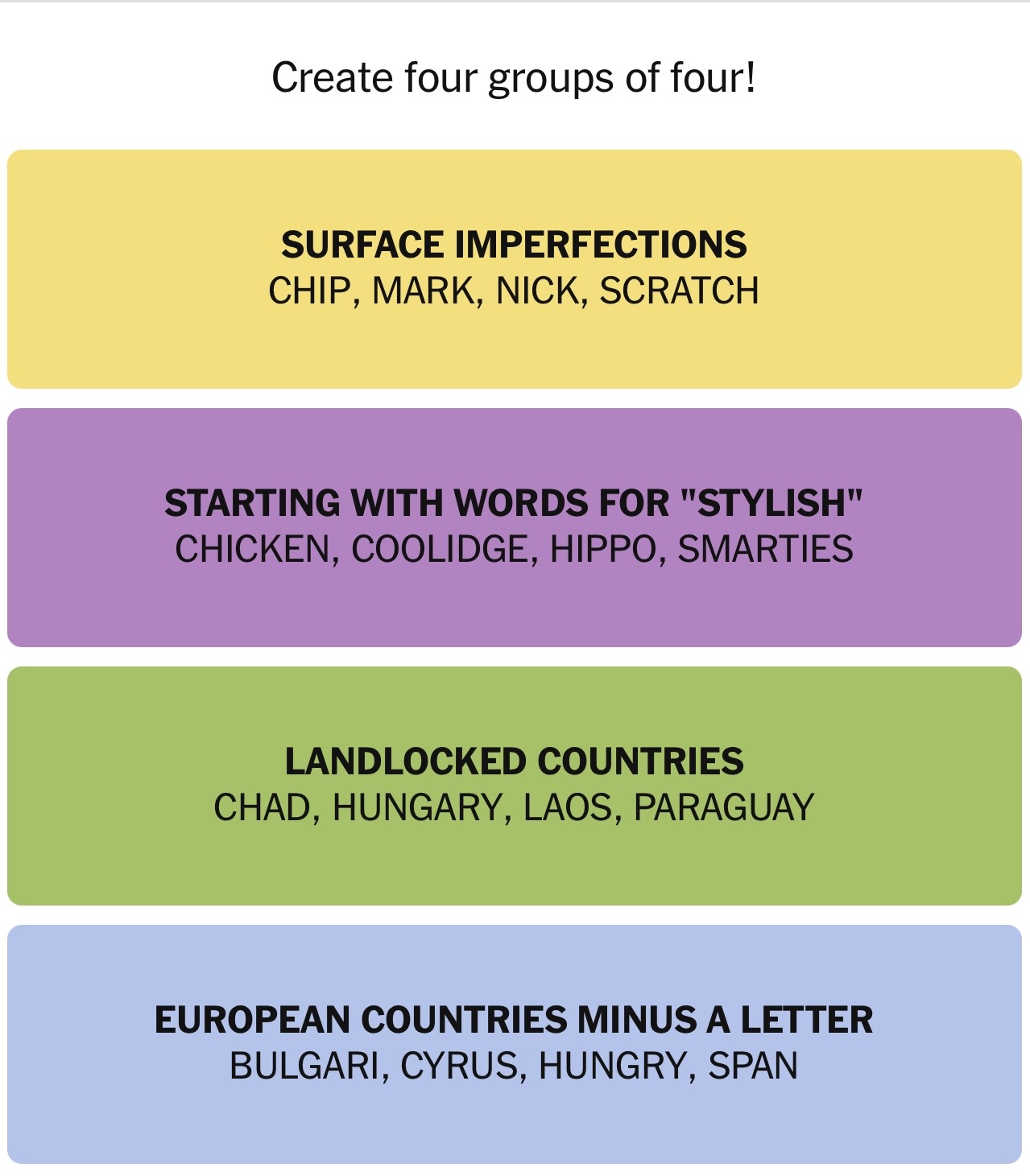
One group I identified correctly was four landlocked countries, including Hungary.
Eventually, I was down to the last four words. And while I knew they had to go together (because they were the only ones left), I couldn't figure out why.
One of those words was HUNGRY.
And I specifically remember thinking, "Well, it can't have anything to do with Hungary, the country, because I already used that in another group."
Turns out, the final category was European countries with one letter missing.
HUNGRY = HUNGARY.
And my immediate reaction?
"THAT SHOULDN'T BE ALLOWED!"
Ummm...excuse me? 😂
Apparently, I had appointed myself the supreme authority on what the New York Times should and shouldn't be allowed to do with its own game.
But what made me laugh wasn't just how ridiculous my reaction was.
It was how quickly I recognized what was behind it.
I was being defensive.
I hadn't figured out the connection, and rather than simply acknowledging that I'd missed something, my brain immediately decided the problem was with the puzzle.
It wasn't that I couldn't figure it out.
It was that the game was WRONG.
And that's when I started thinking about how often we do this in other areas of our lives.
We tell ourselves things like:
"I shouldn't be struggling with this by now."
"It shouldn't be this hard."
"I shouldn't have to deal with this."
"Things shouldn't be this way."
And sometimes, those thoughts reflect legitimate concerns or standards we care about.
But most of the time?
They're simply our emotional response to a reality we don't particularly like.
Maybe we're disappointed. Maybe we're afraid. Maybe our pride is bruised, or accepting what's happening would mean admitting something uncomfortable to ourselves.
So instead of dealing with what is, we start arguing with what should be.
But here's the problem with that:
Reality doesn't change just because we think it should be different.
I can spend all night insisting that the New York Times shouldn't be allowed to use Hungary twice in the same puzzle.
It's not going to change the puzzle.
And while that's a pretty harmless example, this same pattern can have much bigger consequences when it shows up in our relationships, our health, or the way we pursue our goals.
If I keep telling myself that exercising shouldn't be so difficult, I might spend more time being frustrated about how much effort it takes than figuring out what would help me do it more consistently.
If I tell myself I shouldn't have gotten off track, I might get so caught up in judging what happened that I miss the opportunity to learn from it.
And if I keep insisting that I shouldn't feel a certain way, I may never get curious about what's actually driving those feelings.
This is where acceptance becomes such an important skill.
And I want to be clear: Acceptance doesn't mean agreement, approval, or giving up on changing something.
It simply means acknowledging what's true right now, whether we like it or not.
Because that's the reality we have to work with.
So here's something I'd encourage you to practice this week.
The next time you catch yourself thinking, "It shouldn't be this way," pause and get curious.
Ask yourself:
Is this thought helping me identify something I want to change, or is it simply an emotional protest against something that's already happened?
And if it's the latter, what might be underneath that reaction?
You don't have to judge yourself for having it. Just notice it.
Because sometimes the most useful thing we can do isn't to change what's happening around us.
It's to recognize how we're responding to it.
And perhaps remind ourselves that we don't get to make the rules for everything.
Not even Connections. 😉
P.S. If you want 2027 to be different from the years before it, changing what you do is only part of the equation. You also need to change how you think...about yourself, your obstacles, and what you're capable of.
I'm currently welcoming new 1:1 coaching clients, and there's still plenty of time to start making those shifts before the new year.
Book a free call here to learn how we can work together to make 2027 a year of real, lasting change.